
BAGS Meetings in Greyhound Racing
 Available in US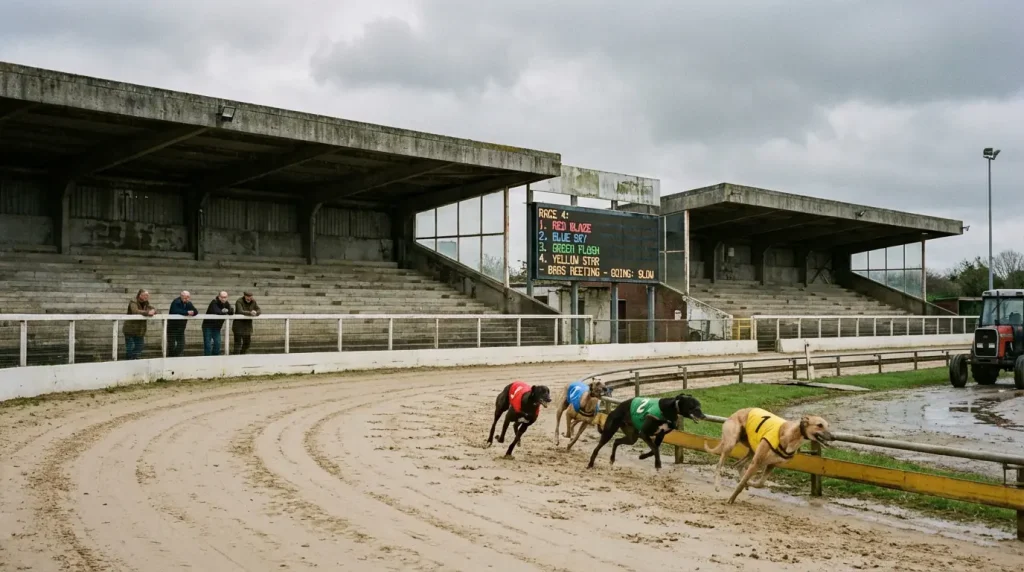
BAGS Meetings — The Workday Engine of UK Greyhound Racing
Before the floodlights go on and the evening crowds arrive, BAGS meetings have already run a full card. Every weekday, while most of the country is at work, greyhound racing takes place at stadiums across the UK — not for spectators in the stands, but for betting shop screens, online bookmakers, and the steady stream of punters who treat daytime dog racing as part of their routine.
BAGS meetings are the commercial backbone of UK greyhound racing. They generate the majority of betting turnover on the sport, fund a significant portion of track operating costs, and provide the racing programme that keeps bookmakers’ greyhound markets active throughout the day. If evening and weekend meetings are the public face of the sport — the ones with restaurant packages and group nights out — then BAGS meetings are the engine room, running quietly and consistently beneath the surface.
For bettors, BAGS meetings represent both opportunity and challenge. The racing is frequent, the markets are always open, and the turnover means there is liquidity behind the prices. But the fields are often lower-grade, the data can be thinner, and the sheer volume of races makes it tempting to bet more often than your analysis warrants. Understanding what BAGS meetings are, how they operate, and where their particular betting characteristics sit is essential if you plan to engage with UK greyhound racing on any regular basis.
The majority of greyhound races you can bet on in 2026 are BAGS races. Ignoring them means ignoring the sport’s commercial centre of gravity.
What BAGS Stands For and How It Works
BAGS stands for Bookmakers’ Afternoon Greyhound Service. The name is a holdover from an era when the arrangement was more visible — a direct contractual relationship between the bookmaking industry and greyhound stadiums to produce racing content specifically for betting shops during daytime hours. The concept has evolved since its origins in the 1960s and 1970s, but the essential mechanics remain the same: tracks stage races, a broadcast service distributes the pictures and data, and licensed bookmakers offer odds and take bets.
The modern BAGS operation is managed by SIS, which handles the scheduling, streaming, and data distribution for the majority of UK daytime greyhound racing. SIS greyhound programming runs up to 39 meetings per week across a rotating roster of tracks, with races typically starting in the late morning and running through the afternoon. Each meeting consists of a card of around 10 to 14 races, with intervals of approximately 15 minutes between them.
The races themselves are standard GBGB-regulated events. They follow the same rules, use the same grading system, and are subject to the same integrity controls as evening and weekend racing. The dogs are registered, the trainers are licensed, and the results count for grading purposes. What distinguishes BAGS meetings from non-BAGS fixtures is the commercial structure behind them, not the quality of regulation.
Tracks that host BAGS meetings receive fees from the broadcast arrangement, which constitutes a significant revenue stream. For many stadiums, particularly those in smaller markets, BAGS income is what keeps the operation viable. Without it, some tracks would struggle to justify running weekday racing at all. This financial dependency shapes the racing calendar — tracks schedule BAGS cards to maximise their broadcast allocation, and the resulting programme drives the volume of greyhound racing available to bettors every day.
From a bettor’s perspective, the BAGS pipeline creates a constant supply of opportunities. Every weekday, from roughly 10:30 in the morning, you can watch greyhound races via SIS streams or bookmaker live feeds, with fresh odds for every race. The volume alone sets greyhound racing apart from horse racing, which has a more concentrated daily schedule. Whether that volume is an advantage or a trap depends entirely on how you use it.
Betting on BAGS Meetings — Tips and Pitfalls
Lower-grade fields and limited data make BAGS both opportunity and trap. The betting landscape at a BAGS meeting is different from an evening premier meeting in several important ways, and adjusting your approach accordingly is not optional — it is the price of entry.
First, the grade profile. BAGS meetings tend to feature a higher proportion of middle-to-lower grade races. You will see plenty of A6 to A10 and D3 to D5 races on a typical daytime card. These grades contain dogs of moderate ability, often with inconsistent form patterns. The fields can be competitive in the sense that no dog stands out dramatically, but the quality of racing is generally below what you would find at a Saturday night premier meeting featuring A1 to A3 races. For the bettor, this means that form analysis is harder — not easier — because the dogs are less predictable and the margins between them are thinner.
Second, the data availability. While racecards for BAGS meetings are published through all the standard channels — Timeform, Sporting Life, At The Races — the depth of coverage and expert analysis is often less detailed than for premier fixtures. Tipsters tend to focus their best work on evening and weekend meetings, where the audience is larger and the racing quality higher. If you are relying on expert selections for your BAGS betting, you may find the quality of guidance more variable.
Third, the market dynamics. BAGS race markets tend to form late and move quickly. Because the audience for a Tuesday lunchtime card at Harlow is smaller than for a Saturday night at Romford, the market has less depth. Prices can shift significantly in the final minutes before a race, and the starting price may differ substantially from the early price offered by bookmakers. This creates opportunities for early-price bettors who have done their homework but also carries the risk of backing a dog whose price drifts for reasons you have not identified.
The volume issue is the biggest pitfall. With races going off every 15 minutes across multiple tracks simultaneously, the temptation to bet frequently is strong. Discipline evaporates when there is always another race loading. Professional greyhound bettors who work BAGS meetings successfully tend to be highly selective — they might watch 30 races and bet on three. Recreational bettors who treat the BAGS card as a conveyor belt of action tend to lose money steadily, one small stake at a time.
There is a practical edge available at BAGS meetings for bettors who specialise. Because the general public and the tipster community pay less attention to daytime racing, there is less collective analysis pressure on the market. If you follow a specific BAGS track closely, track the dogs through their grading cycles, and build your own database of sectional times and run comments, you can develop knowledge that the market has not fully priced in. This is the genuine opportunity that BAGS offers — but it requires investment in time and methodology, not just a willingness to click the bet button.
Where to Find and Watch BAGS Races
SIS streams are the primary source. The Satellite Information Services network distributes live pictures from BAGS meetings to betting shops and licensed online operators across the UK. If you have an account with a major bookmaker that covers greyhound racing — and virtually all of them do — you can access BAGS race streams through the bookmaker’s website or app at no additional cost. The stream quality is functional rather than cinematic, but it shows you the race in real time, which is all you need.
Racecards for BAGS meetings are available through Timeform, Sporting Life, and At The Races from the morning of each racing day. Timeform includes its Analyst Verdict for most BAGS races, providing a brief assessment of how the race might unfold and which dog the analyst favours. At The Races publishes free racecards with form data, and its website also links to live streaming for covered meetings.
In betting shops, BAGS races are displayed on the SIS screens alongside other racing content. The shop will show upcoming races, live prices, and results as they happen. For those who prefer to bet in person, the BAGS card is the daytime staple that keeps the shop’s racing content running between the horse racing fixtures.
For race results and historical data, the GBGB website holds the official database of results from all regulated meetings, including BAGS fixtures. Timeform’s greyhound section also archives results with form data, sectional times, and grading movements. Building your own reference file for BAGS tracks you follow is easier now than it has ever been — the data is publicly available, and cross-referencing results between sources takes minutes.
One additional resource worth noting is the SIS Racing website, which publishes the weekly BAGS schedule. This tells you which tracks are running on which days, how many races each meeting will include, and the approximate timing of the card. If you plan your BAGS betting around specific tracks or specific types of races, the weekly schedule is a useful planning tool.
The Invisible Cards — Why BAGS Meetings Deserve Respect
Most money wagered on greyhounds in the UK flows through BAGS. This is a fact that surprises many people who associate greyhound racing primarily with evening meetings and big televised events. The reality is that the sport’s financial foundation is built on the daily programme of daytime racing, watched mostly on screens rather than from the stands.
BAGS meetings may lack the atmosphere of a packed stadium on a Saturday night, and the dogs running in a D4 sprint at Doncaster on a Wednesday afternoon are not going to win the Derby. But the racing is real, the betting is real, and the money at stake — yours and the bookmaker’s — is real. Treating BAGS meetings as a lesser form of the sport is a mistake that leads to careless betting. Treating them as a rich, under-analysed environment where focused work can yield an edge is a more productive perspective.
The bettors who do well at BAGS meetings are the ones who narrow their focus, build their knowledge systematically, and resist the siren call of constant action. The races keep coming, every 15 minutes, every weekday, all year round. There is no rush. The smart approach is to let most of them pass and strike when your analysis gives you a clear reason to bet. That patience is harder to maintain when the next race is always loading — which is exactly why so few people manage it, and exactly why the edge persists for those who do.
Find more racing guides at greyhoundmeetings.
Also check our UK greyhound racing events calendar.
